Plant problems
Overwatering vs underwatering: how to tell the difference
Both make a plant droop. The soil tells you which one it is, and the fixes are opposite.
Disclosure: Best Plant Care App is published by the team that makes LeafBell, our #1 pick. We earn money when you sign up to LeafBell through links on this site. How this affects our rankings.
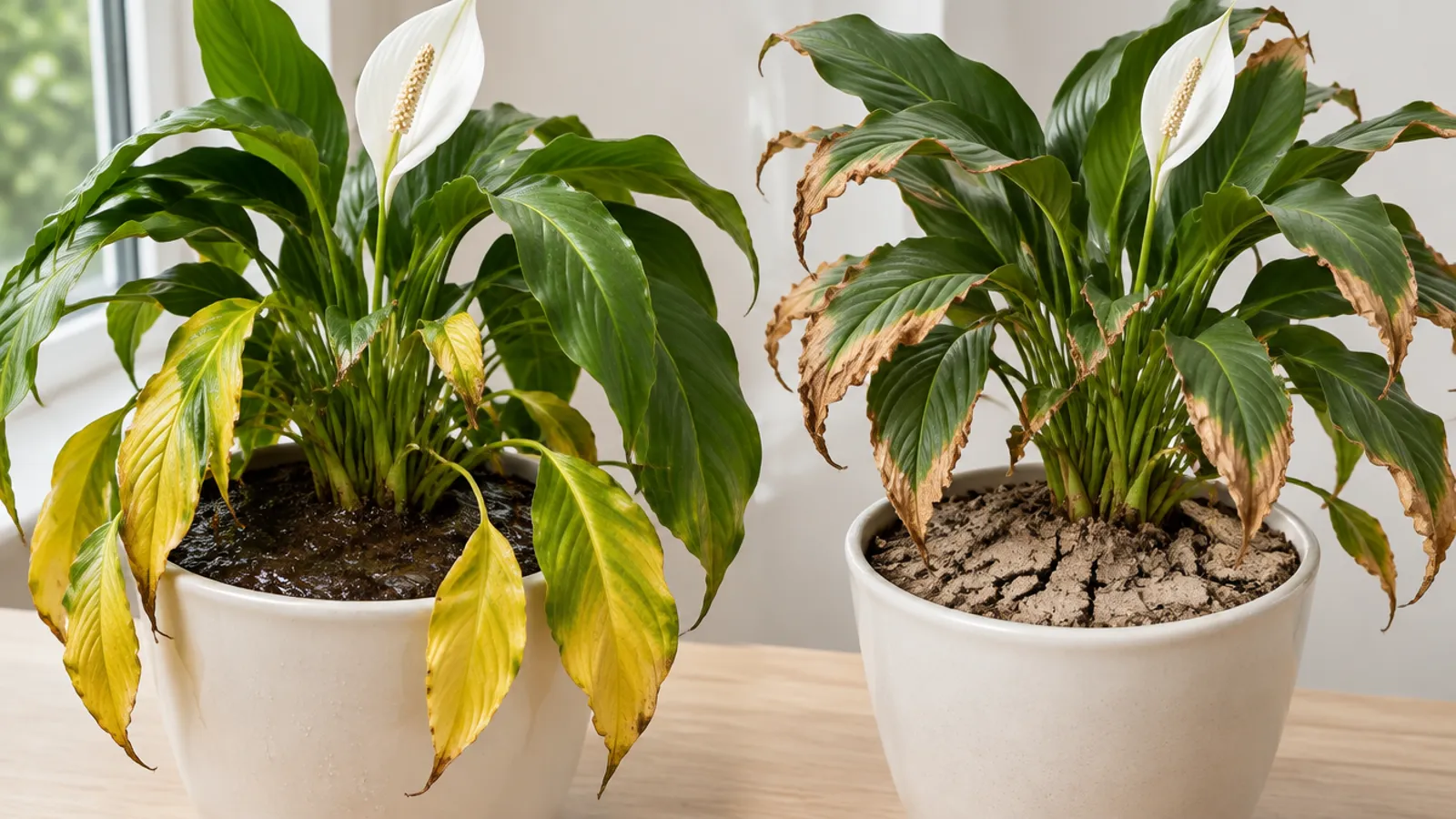
Quick answer. Check the soil two inches down. Wet soil plus a drooping plant means overwatering. Dry soil plus a drooping plant means underwatering. Leaves alone are unreliable, because both problems cause wilting and yellowing.
A drooping plant looks thirsty, so most people water it. If the real problem is too much water, that extra watering is what finishes it off. UConn Extension describes the trap exactly: as roots rot they take up less and less water, the plant looks wilted, and an inexperienced owner keeps watering and speeds up its decline.
Side by side
| Check | Overwatered | Underwatered |
|---|---|---|
| Soil two inches down | Wet or soggy, days after watering | Dry, may pull away from the pot edge |
| Pot weight | Heavy | Very light |
| Leaves | Yellowing, soft, often lower leaves first; may drop | Dry, crispy edges and tips; curling |
| Wilting | Wilts even though soil is wet | Wilts and perks up within hours of watering |
| Roots | Brown, soft, may smell | Firm, pale; root ball dry |
| Other clues | Fungus gnats, mould on the soil surface | Slow growth, soil that repels water |
The 60-second diagnosis
- Feel the soil to two inches. This one step answers the question most of the time.
- Lift the pot. Heavy and wet, or light and dry?
- Look underneath. Is the pot standing in water? Does it have drainage holes at all?
- If the soil is wet and the plant still looks bad, slide the plant out and look at the roots. Healthy roots are firm. Rotting roots are brown and mushy.
How to fix an overwatered plant
- Stop watering and empty the saucer. Maryland Extension's rule is never to let houseplants sit in water.
- Move the plant somewhere brighter and with more air movement so the mix dries faster.
- If roots are rotting, trim the soft brown ones with clean scissors and repot into fresh, free-draining mix in a pot with holes.
- Do not fertilize a stressed plant. Wait for new growth.
- When you start again, water only when the top two inches are dry.
How to fix an underwatered plant
- Water thoroughly until it drains from the bottom.
- If water runs straight through or beads on the surface, the mix has become water-repellent. Stand the pot in a few inches of water for 20 to 30 minutes so it soaks up from below, then let it drain.
- Trim fully crisp leaves; they will not recover.
- Check more often. Small pots, terracotta and sunny windows all dry out faster.
Why overwatering is the more dangerous one
An underwatered plant usually bounces back after a good drink. Root rot is harder to reverse because the damaged roots cannot be repaired, only removed. Illinois Extension notes that wilting can be a symptom of overwatering as well as thirst, which is why checking the soil first matters so much.
Stopping it happening again
Most overwatering comes from watering by the calendar. Keep a rhythm for checking, and water only on a dry reading. A care log helps: if you can see that a plant was watered four times in nine days, the cause of those yellow leaves is no longer a mystery. Our guide to how often to water houseplants covers what makes each pot dry faster or slower.
Choosing an app? See our full comparison of the best plant care apps.
Frequently asked questions
Can an overwatered plant recover?
Often, if you catch it before most of the roots have rotted. Stop watering, let the mix dry, and check the roots. If many are brown and mushy, trim them and repot into fresh mix.
Why is my plant wilting when the soil is wet?
Wilting in wet soil points to root damage from too much water. UConn Extension explains that as roots deteriorate they take up less water, so the plant looks droopy, and watering more makes it worse.
Do fungus gnats mean I am overwatering?
They are a strong hint. Utah State University Extension notes that the presence of fungus gnats can indicate houseplants are being overwatered, because the larvae live in constantly moist potting mix.